Project Photos
Inspired by this project? We'd love to help with yours.
Got a floor plan, sketch, or rough measurements? Send it over. We'll advise on the right system, confirm feasibility, and come back with a budget estimate, before any site visit or commitment.
Glass partitions divide commercial spaces without blocking light, visibility, or the feel of the space. Meeting rooms, private offices, breakout areas, and reception zones, all created with glass walls rather than solid stud.
The key decisions are acoustic performance, frame visibility, and whether the system needs to be demountable. Single-glazed systems suit general separation; double-glazed and acoustic laminate are the right spec for meeting rooms and private offices. We design around how your space is actually used. For external commercial glazing, see our commercial balustrades page.
Office glass partitions need to do more than look good; they need to work within an active environment. We regularly install partitions in live offices, planning installations to minimise disruption and ensure the space remains functional throughout the process.
Every installation is tailored to your layout, with practical recommendations based on how your space is actually used day-to-day. See our glass types guide for detail on acoustic specifications.
Create privacy while maintaining an open, connected feel in your workplace. Glass office partitions and meeting room walls allow management visibility, natural light to flow between spaces, and a professional aesthetic that a stud wall cannot match. Available as single-glazed (more economical) or double-glazed (better acoustic performance) depending on your requirements.
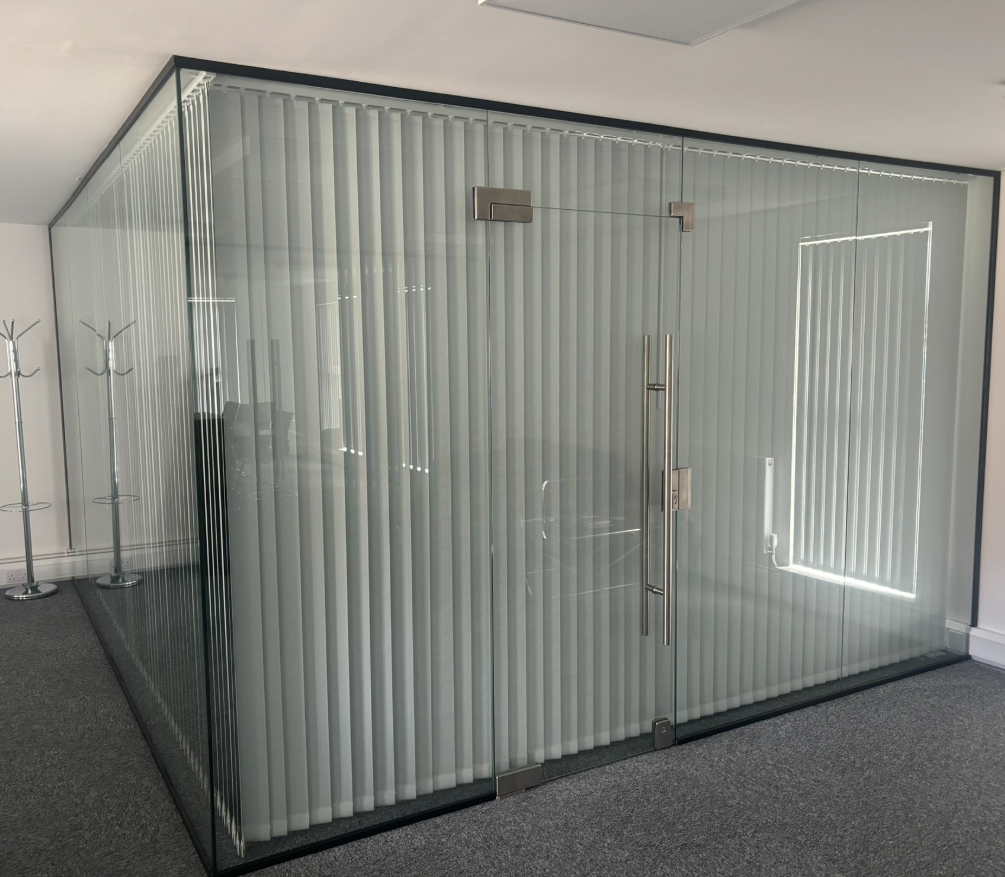
The term "frameless" is commonly used in glass partitions, but it usually describes the appearance of a system rather than how it is actually constructed. Most glass partition systems, including so-called frameless designs, are installed using discreet head and base channels, or a minimal perimeter frame, to provide structural stability. The glass itself does not simply float in space.
The more meaningful distinctions between systems are visual profile (how much frame is visible), door type (which has direct implications for acoustic performance and practicality), and whether the system is demountable.
Glass panels fixed into slim floor and head channels, typically 10–15mm wide. No visible vertical framing between panels. The result reads as uninterrupted glass. Used in receptions, boardrooms, and high-specification commercial spaces. Still relies on channels for structure; it is the appearance that is frameless, not the fixing method.
A slimline aluminium profile runs around the full perimeter of each panel: head, base, and vertical stiles between panels. Visible but narrow. This is the most widely specified commercial system because it is versatile, demountable, and can accept both single and double-glazed units. The frame also provides better sealing at doors, which directly improves acoustic performance.
A door leaf of 12mm+ toughened glass hung on a floor pivot and overhead closer: no aluminium frame around the door leaf itself. Can open in both directions (approximately 180°). Minimal, premium appearance. Important limitation: the gap around a pivot door leaf is harder to seal effectively, so acoustic performance is lower than a framed door. Best suited where appearance is the priority and full sound privacy is not required.
An aluminium frame surrounds the door leaf and integrates into the partition frame post. Hinged on one side; typically opens in one direction (~90°). The frame allows compression acoustic seals to be fitted on all four sides of the door opening. This is why framed systems generally achieve better acoustic performance; the seals can engage fully when the door is closed. The practical choice for meeting rooms and private offices.
Glass panels are fixed into slim floor and ceiling channels with no visible vertical frame between panels, giving the impression of uninterrupted glass from edge to edge. The channels are still there for structural stability, but at 10–15mm wide they read as a shadow line rather than a structural element. Heavier glass (12mm or 15mm) is typically used to provide sufficient rigidity across larger panel widths.
This system suits receptions, boardrooms, and high-specification offices where visual impact is the priority. Door options are typically frameless pivot doors: premium appearance, but with the acoustic trade-off that pivot doors are harder to seal effectively than framed alternatives.
A slimline aluminium profile runs around the perimeter of each panel: head track, base track, and vertical stiles between panels. The frame carries the structural load and provides the fixing points for doors. Panel widths are typically 600–1200mm; the system can accept single-glazed (10mm, Rw ~28–32 dB) or double-glazed units (Rw ~38–42 dB) within the same profile by using a deeper frame section.
The framed door is the main acoustic advantage of this system. Compression seals can be fitted on all four sides of the door frame, eliminating the gap that is difficult to address in frameless pivot doors. For any application where sound control matters (meeting rooms, private offices, HR spaces), an aluminium-framed system with a framed door and acoustic seals is the right specification.
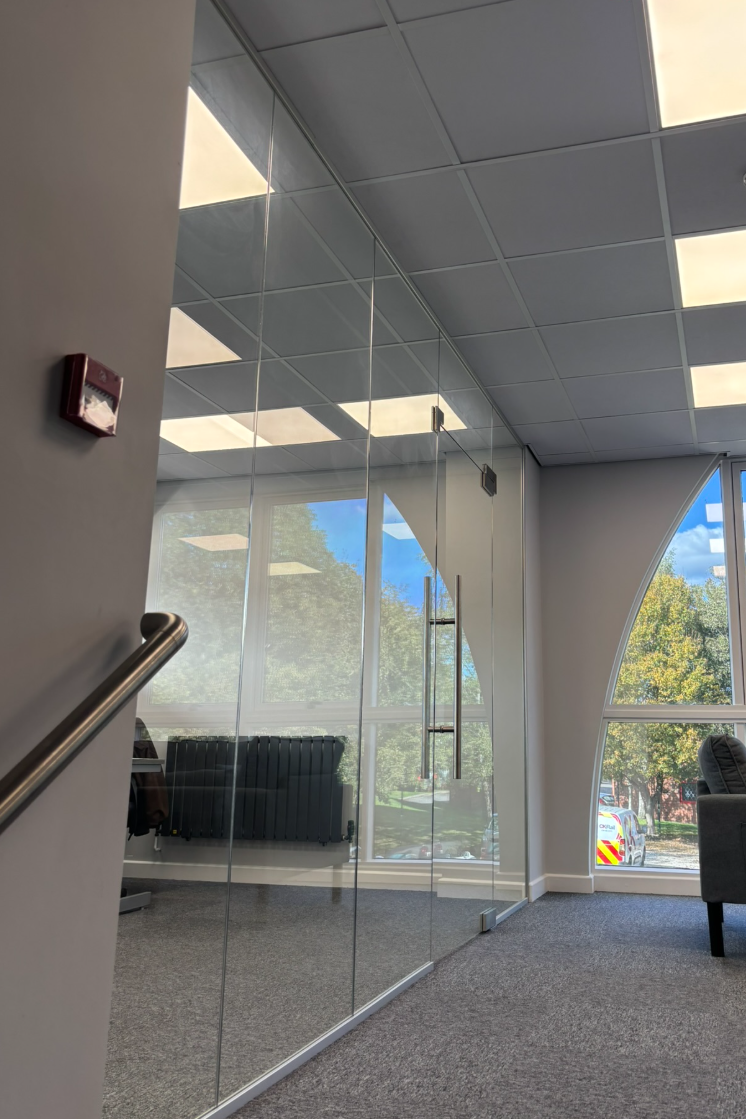
Send us what you have: drawings, photos, or a rough description of the space. We'll confirm which system suits, check feasibility, and come back with a budget estimate. No site visit required at this stage.
Send us your floor plan, measurements, or a quick description. We'll confirm which system we'd specify and come back with a no-obligation budget estimate, before any site visit.
The same systems work equally well in residential settings. Common applications include kitchen-diner dividers, home office enclosures, hallway separators, and bathroom shower screens, all cut to your exact dimensions.
Open-plan spaces divided into defined zones without blocking light. Kitchen-diner to living areas, hallway separators, home office enclosures: minimal-channel or aluminium-framed, fixed panels or with an integrated door leaf depending on layout and privacy requirements.
Fixed panels, walk-in configurations, or hinged door screens for bathrooms and en-suites. Toughened safety glass (8mm or 10mm) with slim channel fixings or minimal perimeter framing depending on configuration. Anti-limescale Easy Clean coating available.
From initial enquiry to installation, we keep the process simple and transparent so your project stays on time and on budget.
Share photos of the space and rough measurements. No need for precision at this stage; we just need to understand the layout and your requirements.
We'll come back with a tight price range so you can sense-check the project against your budget before committing to anything.
Once you're happy to proceed, we visit site to take precise measurements, confirm glass type, frame colour, and door configuration, and identify any structural considerations.
You receive a fully itemised, fixed-price quote. No hourly rates, no open-ended costs. The price you approve is the price you pay.
A 30–50% deposit confirms your order. Glass is cut and toughened to your exact dimensions, typically 3–5 weeks depending on specification.
Our team installs to a fixed schedule to minimise disruption. Balance is due on completion, once you're satisfied with the installation.
Set your dimensions, glass type, frame colour, and door configuration. Hit Get a Free Quote and we'll come back with a system recommendation and a no-obligation budget estimate based on your design.
Enter your details and we’ll get back to you with a no-obligation quote. We’ll include your partition design.
We’ll be in touch shortly with your free quote.
Recent glass partition and glass wall installations completed by our team.
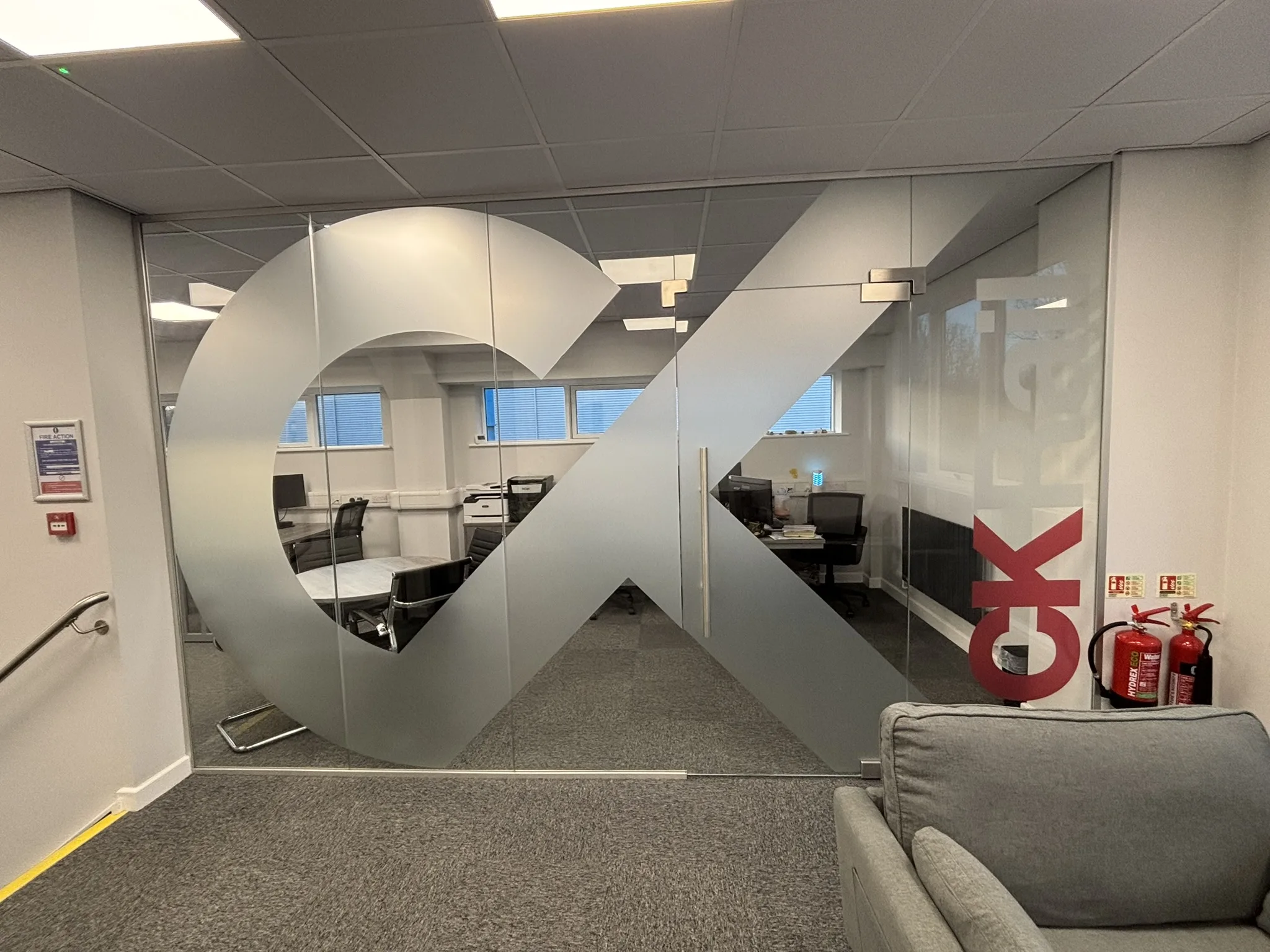
A clean, modern aluminium glass partitioning system installed for CK Rail in Chesterfield, complete with a bespoke pivot door and branded vinyl finish.
View project →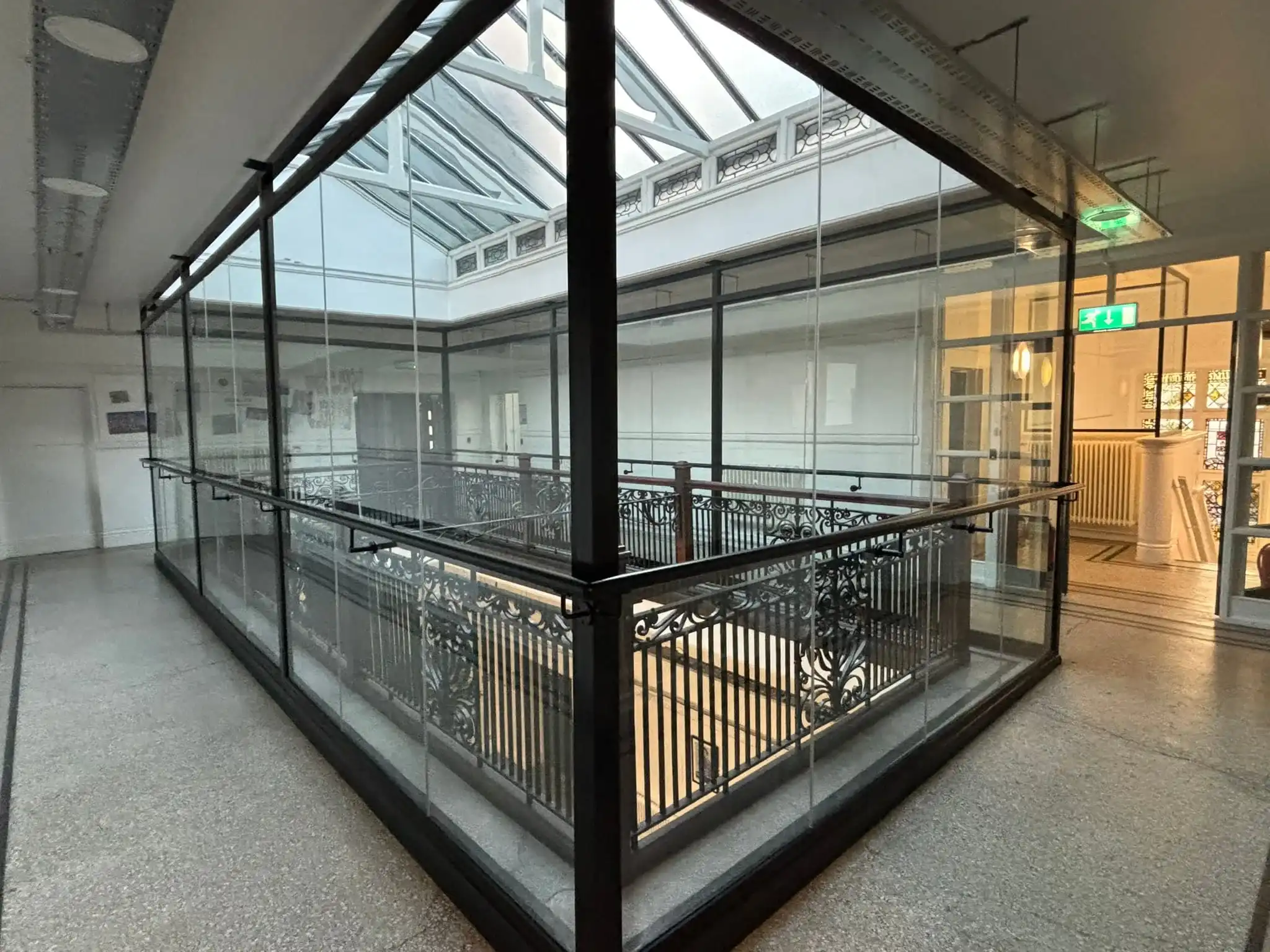
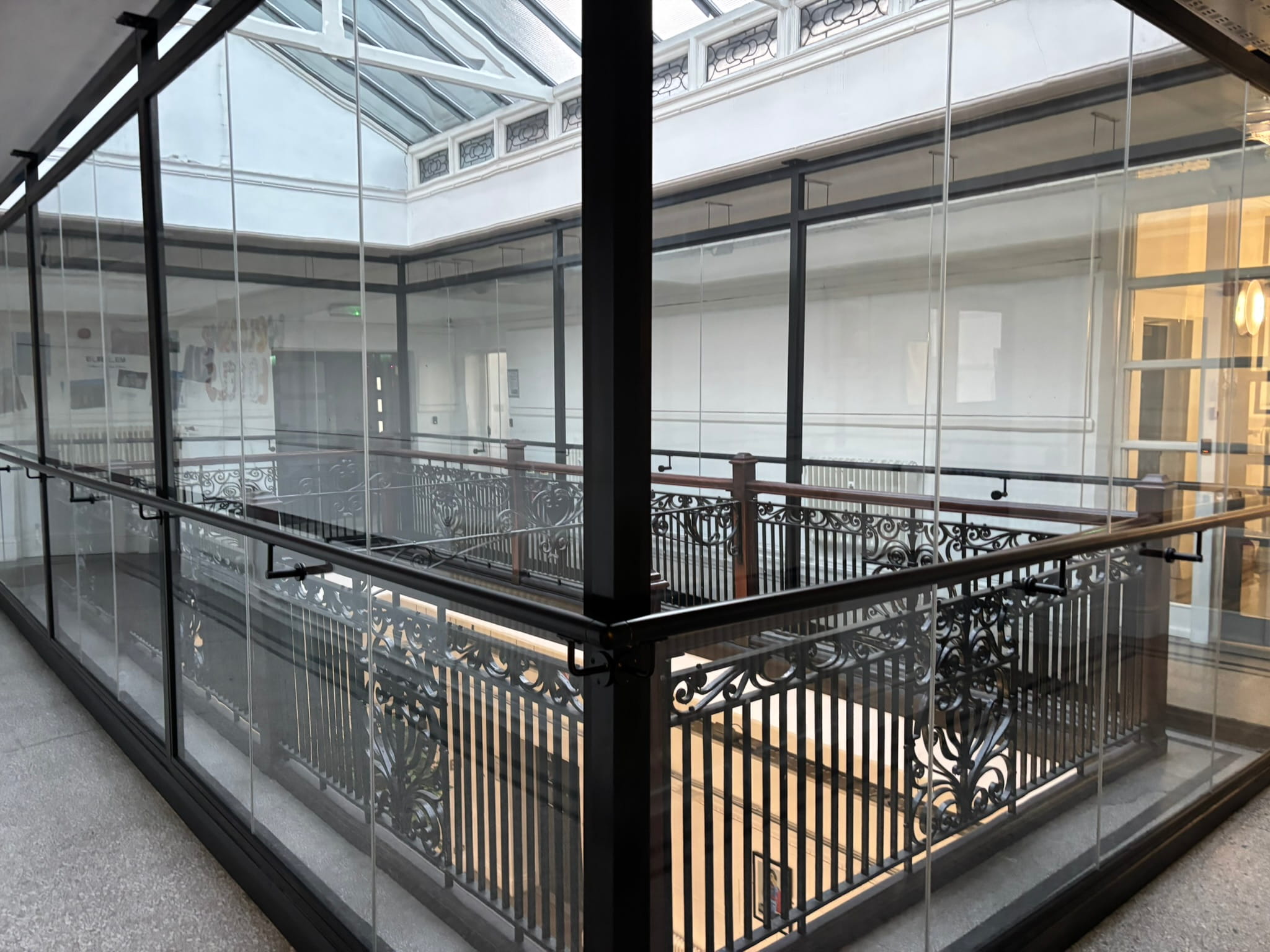
A bespoke full-height toughened and laminated glass safety barrier system installed over an existing low-level balustrade within Burslem School of Art — a Grade II* listed building in Stoke-on-Trent. 11.5mm toughened laminated glass with sympathetic fixings to protect the listed fabric.
View project →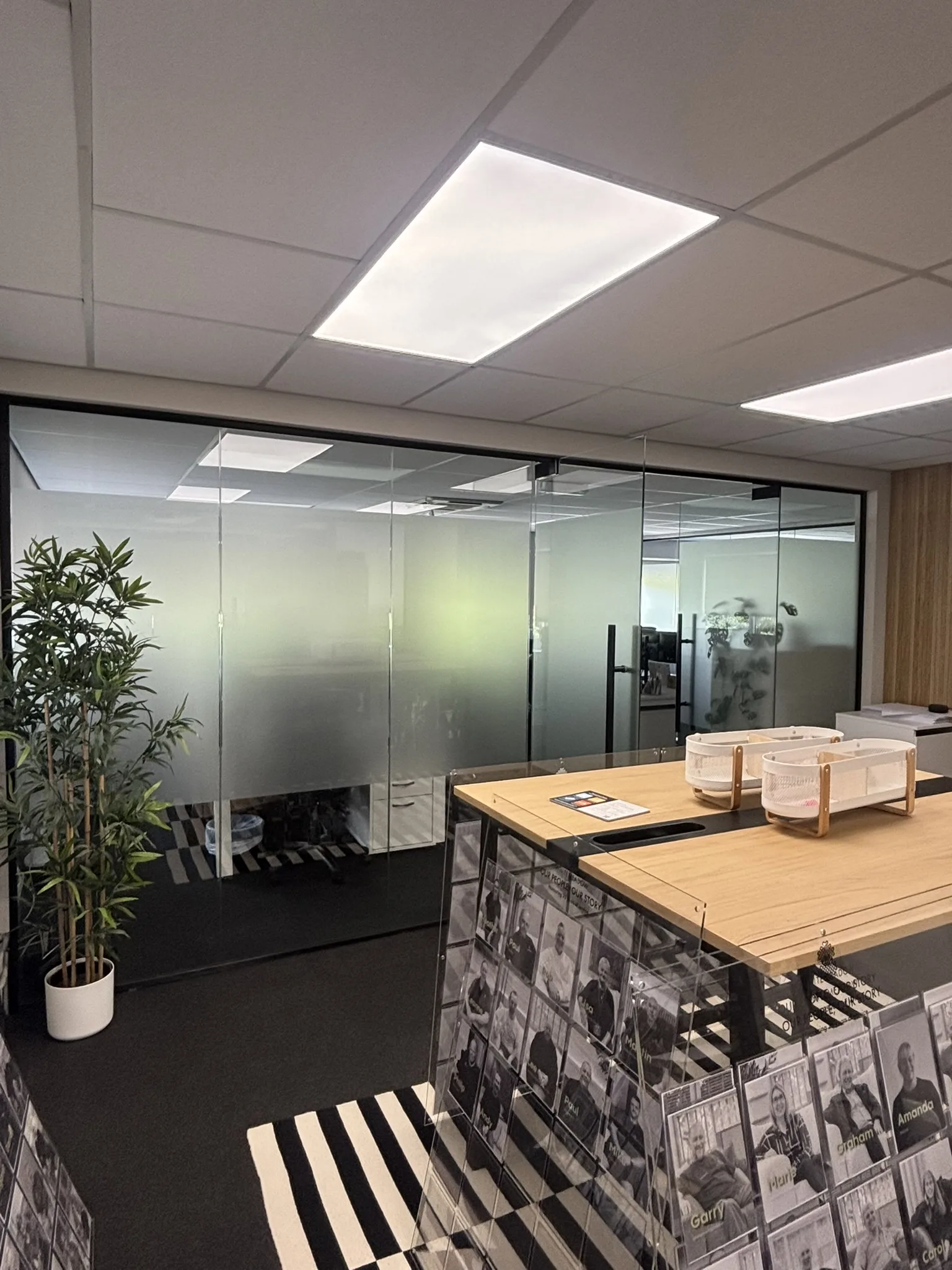
Installation of a modern black-framed glass partition system to divide one large office into three separate workspaces, complete with full-height glazed doors, privacy frosting and a clean architectural finish.
View project →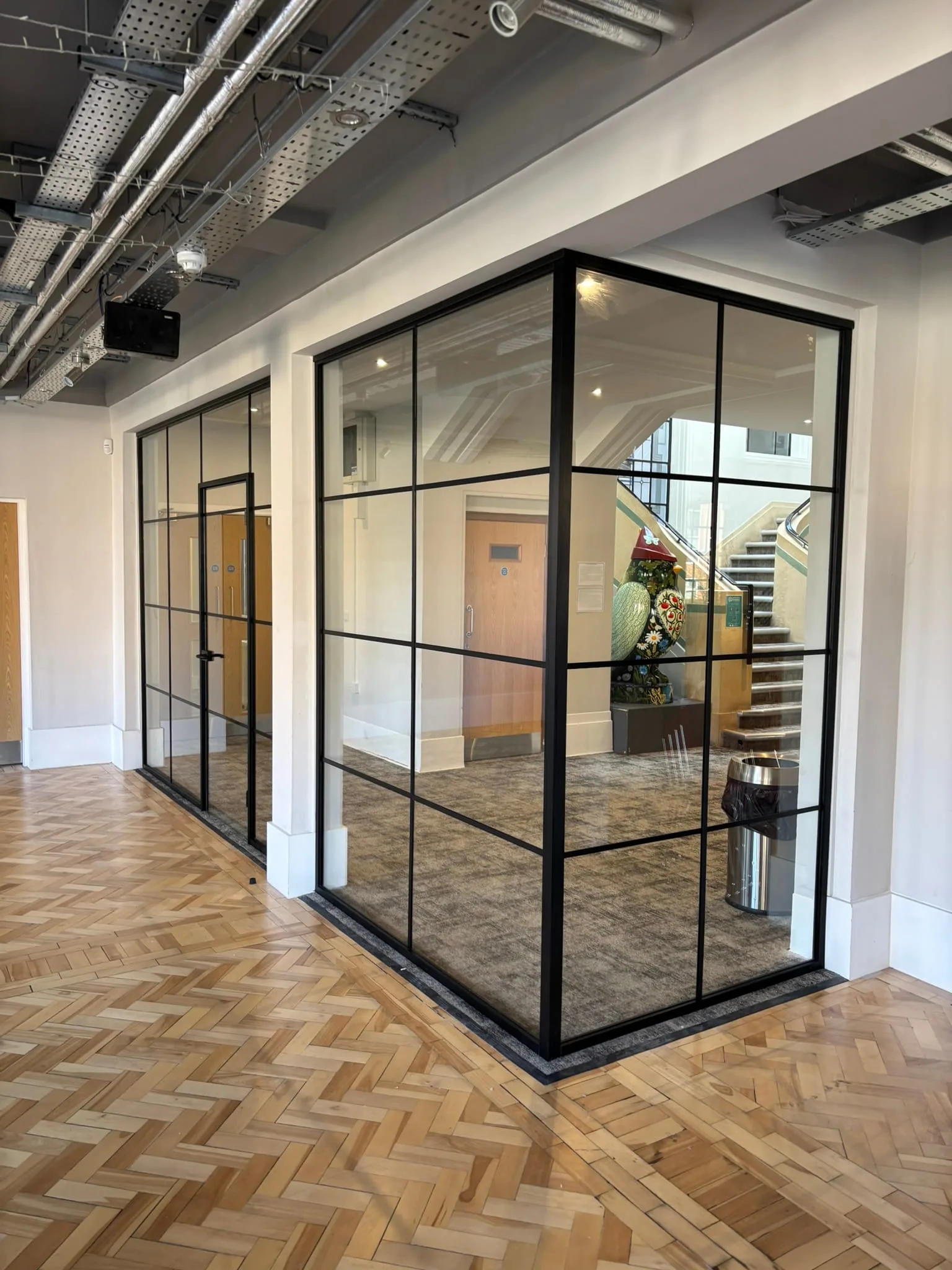
Modern black aluminium framed glass partitioning installed in Beeston, Nottingham. Featuring 12mm toughened glass with crittall-style bars and a framed door for improved acoustic performance.
View project →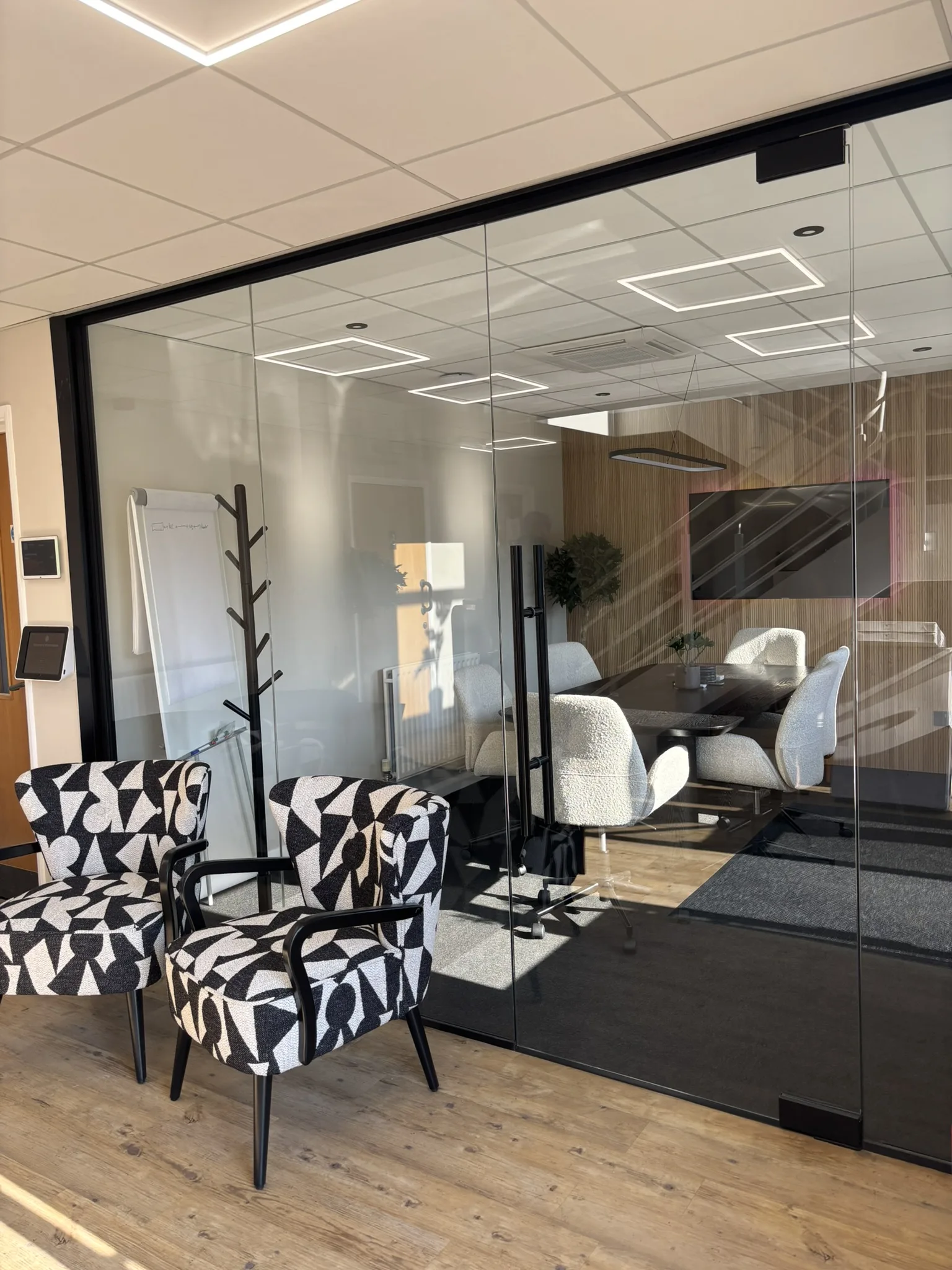
A sleek office partition wall installed for a small meeting room, featuring 10mm toughened glass with a frameless glass door. Finished with a black aluminium frame, black perimeter trimming, and an 800mm bar handle, the installation was completed in just one day for a local upholstery company.
View project →More information on glass specifications, related services, and technical guides.
No unnecessary site visits before budget alignment. Here is how the process works from first contact to completed installation.
Phone photos and approximate dimensions are enough to get started.
We provide a tight price range before any site visit. If the budget works, we arrange a survey.
Survey confirms all dimensions and spec. We issue a clear, itemised, fixed-price quotation.
A 30–50% deposit secures your order and date. Balance is due on completion.
We design and install glass partitions across Nottinghamshire, Derbyshire, South Yorkshire, and Lincolnshire. Each location page covers local commercial and residential work, system options, and pricing for that area.
Share a floor plan, sketch, or rough measurements. We'll confirm which system suits your space, check feasibility, and come back with a clear, no-obligation budget estimate. No site visit required to get started.
Inspired by this project? We'd love to help with yours.