Glass Partition Systems Explained: A Practical Guide for Offices
Whether you're fitting out a new office or dividing an existing space, this guide covers how glass partition systems actually work: the types available, acoustic performance, glass specifications, and realistic costs.
What Is a Glass Partition System?
A glass partition system is a non-load-bearing internal wall built primarily from toughened glass panels, held in place by a structural framework, typically aluminium. Unlike solid stud walls, they divide space without blocking natural light or creating the enclosed, heavyweight feel of brickwork or plasterboard.
They're used across offices, meeting rooms, receptions, and commercial fit-outs. The appeal is practical as much as aesthetic: glass partitions allow managers to see across a floor, keep staff connected to the wider space, and create rooms that feel purpose-built rather than improvised.
The alternative (a solid wall) takes longer to build, costs more to remove if the layout changes, and permanently affects the character of a space. A glass partition system is faster to install, demountable if needed, and gives you a finish that looks intentional from day one. For a broader overview of what we offer, see our glass partitions page.
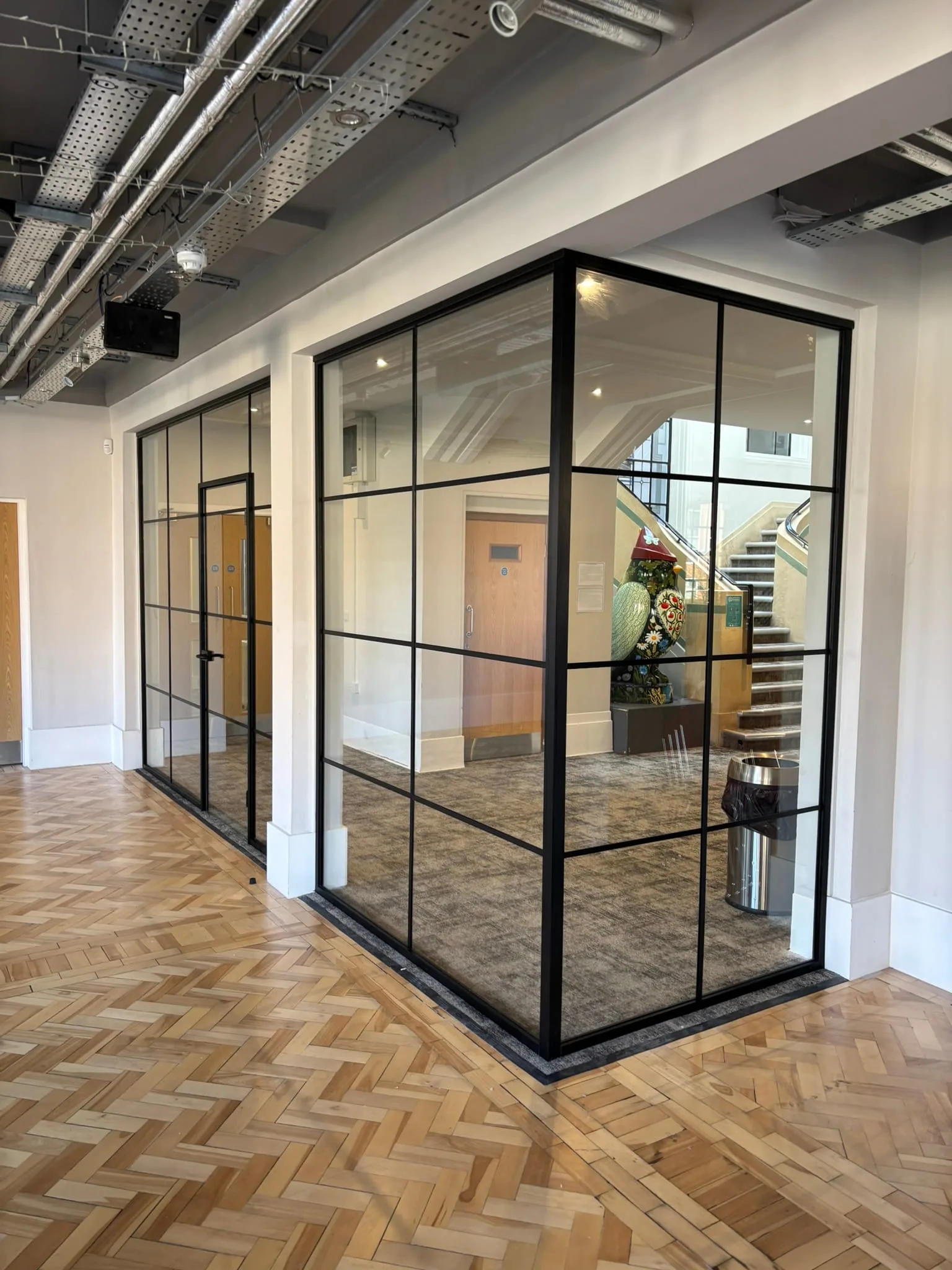
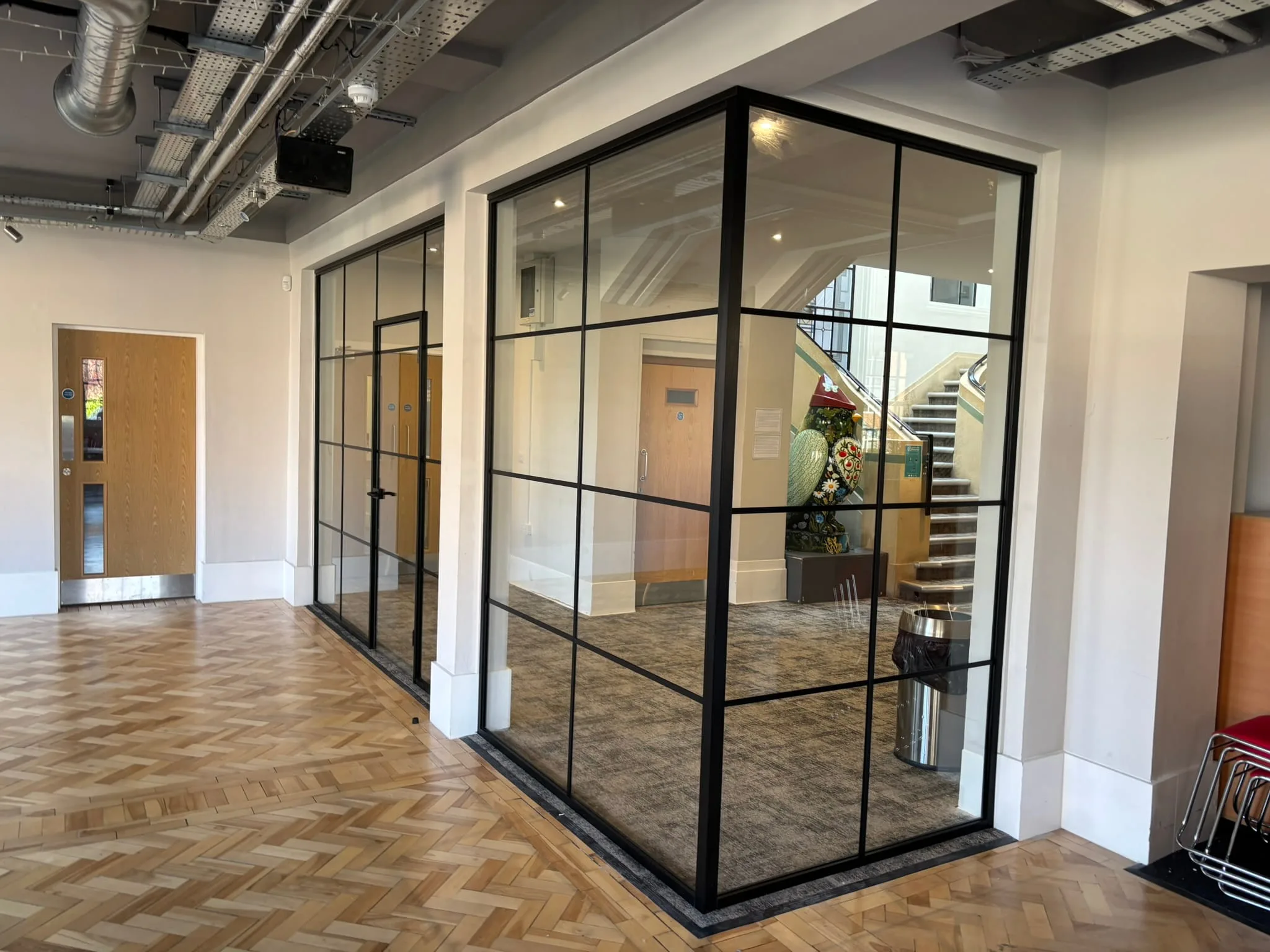
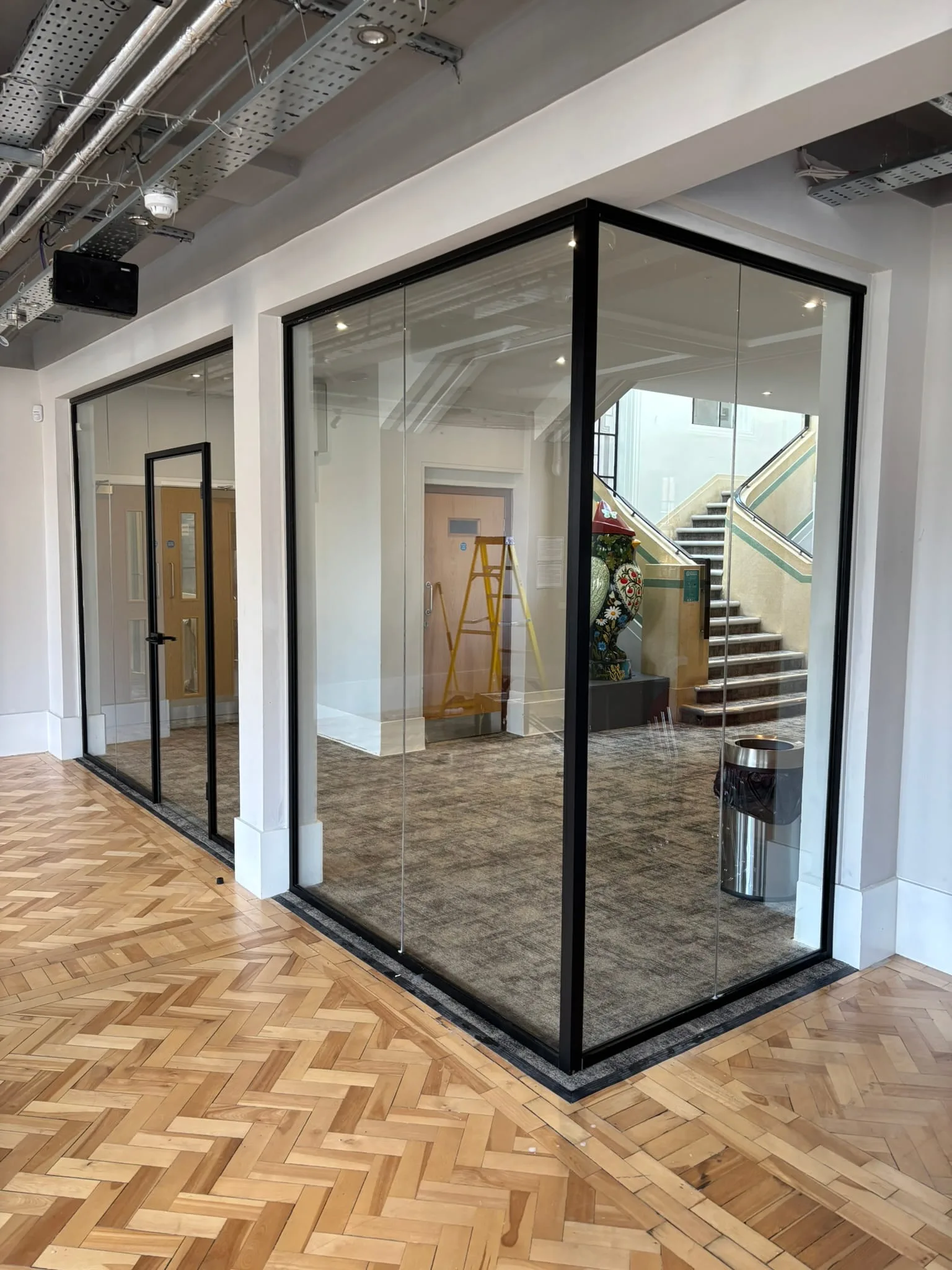
Black aluminium framed glass partition system (Beeston, Nottingham)
Types of Glass Partition Systems
The system you choose affects acoustic performance, cost, and appearance. Most commercial installations use aluminium-framed systems; they're structurally reliable, easier to seal properly, and well-suited to standard commercial fit-out budgets.
Aluminium Framed Systems
The most widely used system in commercial fit-outs. Aluminium sections are fixed to the floor, ceiling, and side walls to create the structural frame, and glass panels are set into the sections with appropriate seals. The frame provides rigidity, makes door integration straightforward, and keeps the overall cost reasonable.
The aluminium framework can be powder-coated in any RAL colour, so whether you need matte black to match a contemporary interior, white to sit against a light ceiling, or a specific corporate colour to align with your brand, the frame can be specified accordingly. The standard RAL range runs to over 200 colours, and bespoke matches are possible. The frame is visible within the system, but slim-section profiles keep it looking intentional rather than industrial.
Single Glazed Systems
A single pane of toughened glass (usually 10mm or 12mm) within an aluminium frame. Straightforward to install, lower in cost, and well-suited to spaces where visual separation matters more than acoustic performance.
Sound reduction with a single-glazed system is limited. Voices are muffled rather than blocked, which may be sufficient for general office separation, but isn't the right specification for boardrooms, HR offices, or anywhere that requires speech privacy.
Double Glazed Systems
Two panes of glass separated by a cavity, the same principle as a double-glazed window. The air gap interrupts sound transmission and provides measurably better acoustic performance than a single-glazed equivalent, as well as some thermal benefit.
Double-glazed partitions are the standard recommendation for meeting rooms and private offices. The profile is wider than single-glazed, but still slim enough to look considered in a professional environment.
Glass Partition Doors
Hinged and sliding glass doors can be integrated into any framed partition system. Hinged doors are more common; they're easier to seal properly around the frame, which is important if acoustic performance matters. Sliding doors save floor swing space but are harder to seal at the edges.
Both options are available with lock sets, door closers, and various handle finishes. The door frame typically matches the partition frame, giving the whole installation a cohesive look.
See our dedicated office glass partitions page and acoustic glass partitions page for more detail on specific applications.
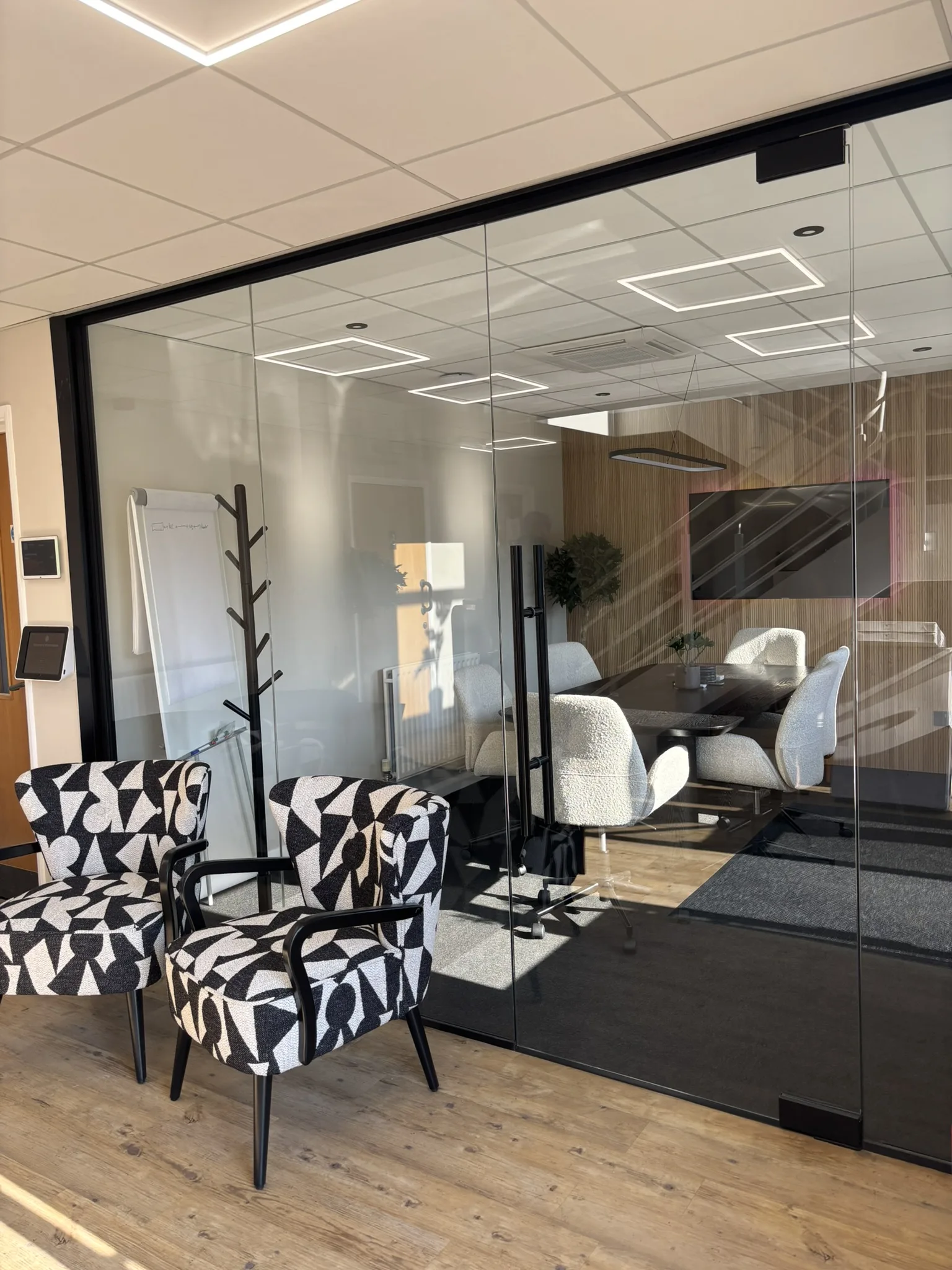
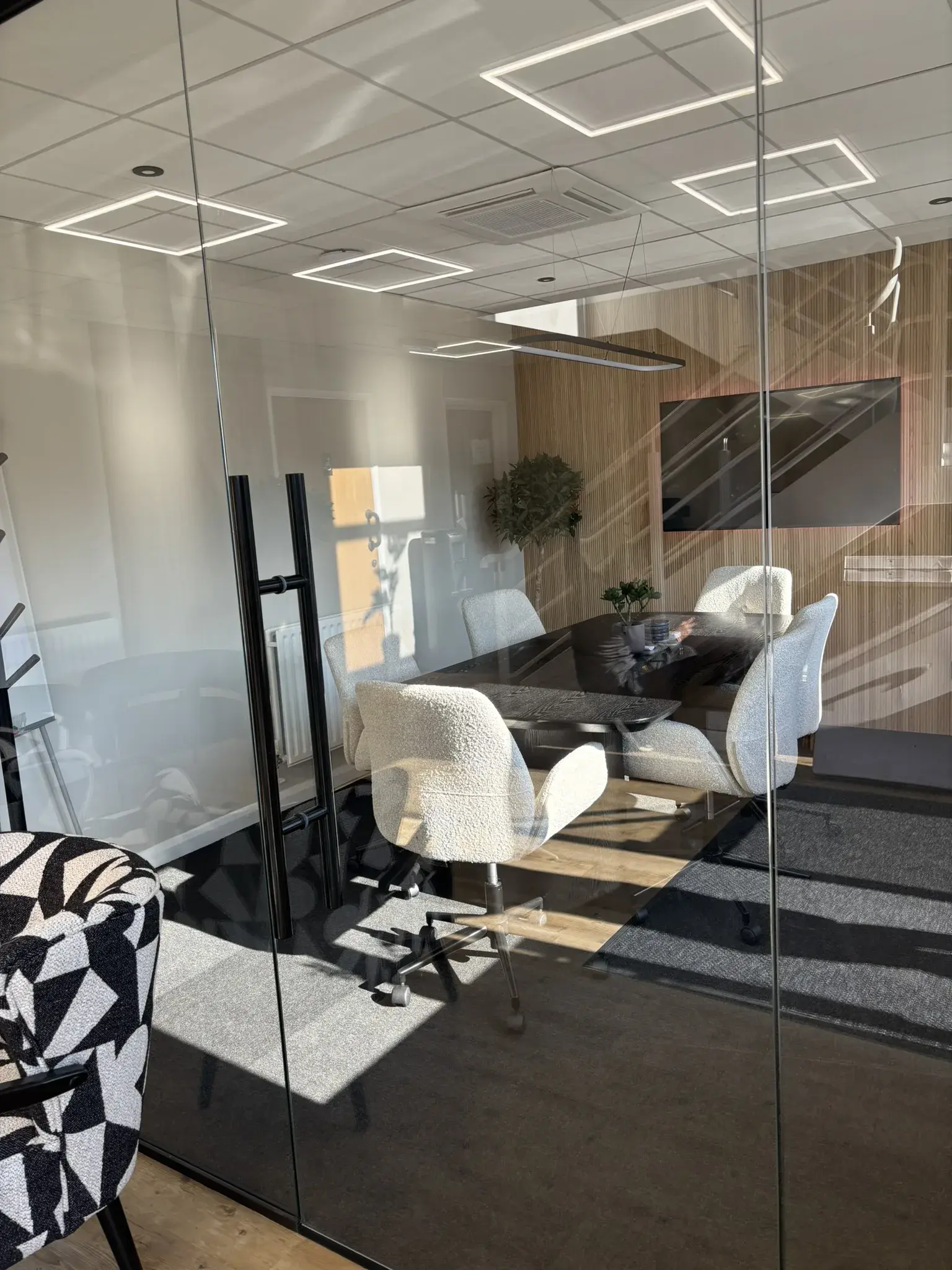
Left: Meeting room glass partition with door, Mansfield | Right: Acoustic glass partition door detail, Nottingham
Not Sure What Your Budget Gets You?
The Project Budget Guide shows real installations at different price points, so you can see what's achievable before committing to anything. It's the quickest way to calibrate your expectations and identify the right system for your budget.
Explore the Budget Guide →Glass Thickness & Safety Standards
All glass used in partition systems must be toughened safety glass. This isn't optional, it's a requirement under BS 6206. Toughened glass is heat-treated to be several times stronger than standard float glass. If it does break, it fragments into small, blunt-edged pieces rather than large dangerous shards.
For most single-glazed partition applications, 10mm toughened glass is the standard specification. 12mm is used where larger panel sizes are involved, or where the design calls for a more substantial feel; it's heavier, adds cost, but gives a noticeably more solid result.
Double-glazed units typically use two panes of 6mm toughened glass separated by a cavity, giving a total thickness around 20–28mm depending on the spacer used. Every pane carries the appropriate BS kite mark.
At a glance
- 10mm Standard single-glazed panels (most partition applications)
- 12mm Larger panels and heavier-duty installations
- 6+6mm Double-glazed units (improved acoustic and thermal performance)
- BS 6206 Safety glazing standard (applies to all installations)
Acoustic Performance: What's Realistic
Acoustic performance is the question we get asked most often, and the one that's most commonly oversimplified. No glass partition system is completely soundproof, but the right specification will significantly reduce noise transfer and create a level of privacy that works in practice.
Double Glazed Systems
The air cavity between the two panes disrupts sound waves in transit. The result is a meaningful reduction in sound transmission compared to single-glazed, particularly across the mid-frequency range where speech sits. For a meeting room in a busy office, a double-glazed partition is usually the minimum sensible specification.
Double-glazed systems are not fully soundproof, but voices become significantly harder to distinguish through the glass, which is the practical threshold most clients need.
Acoustic Laminated Glass
Acoustic laminated glass uses a specialist PVB interlayer bonded between two panes of glass. That interlayer is specifically engineered to absorb and dampen sound energy; it performs differently to a standard double-glazed unit and provides measurably higher decibel reduction, particularly at speech frequencies.
For maximum performance, the full system matters: acoustic glass in a properly sealed frame, with a well-fitted door and seals around the perimeter. The glass alone won't deliver its rated performance if sound is bypassing it through gaps at the edges or under the door.
Important: No glass partition system is fully soundproof. The right combination of double-glazed or acoustic laminated glass, a well-sealed frame, and a properly fitted door will significantly reduce noise, but not eliminate it. If total acoustic isolation is required, a solid wall is the only reliable solution.
See our acoustic glass partitions page for a full breakdown of specifications and system options.
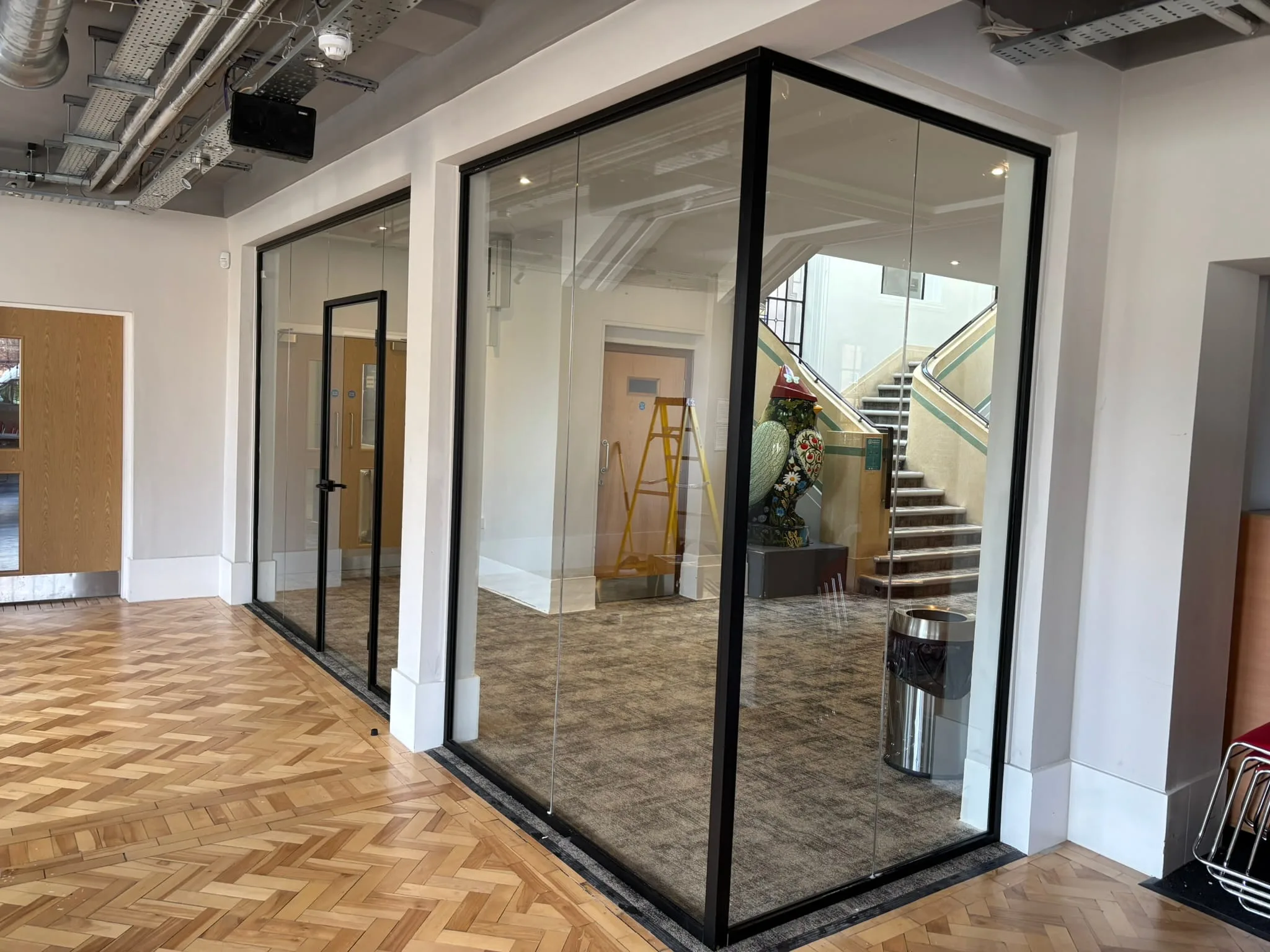
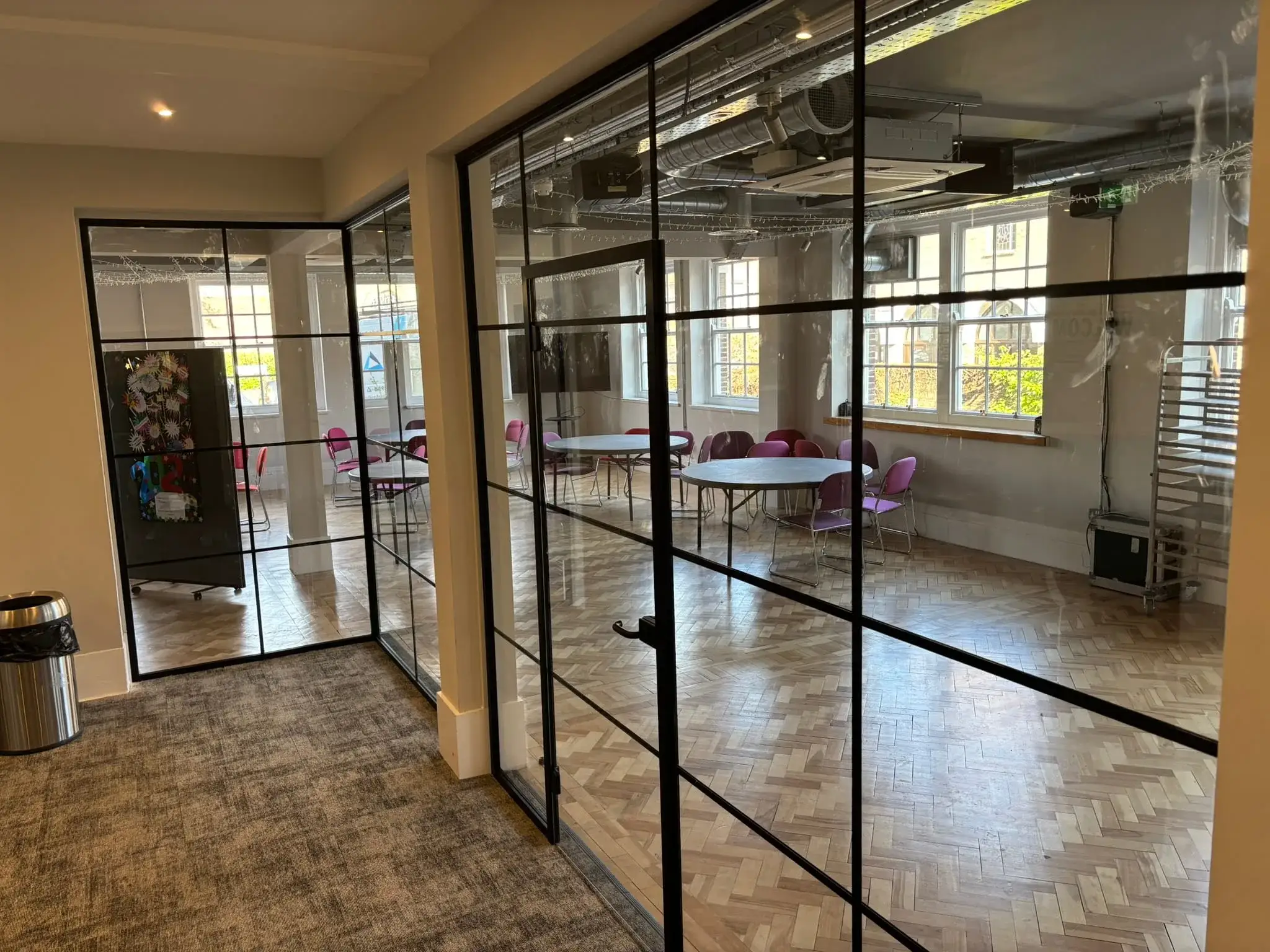
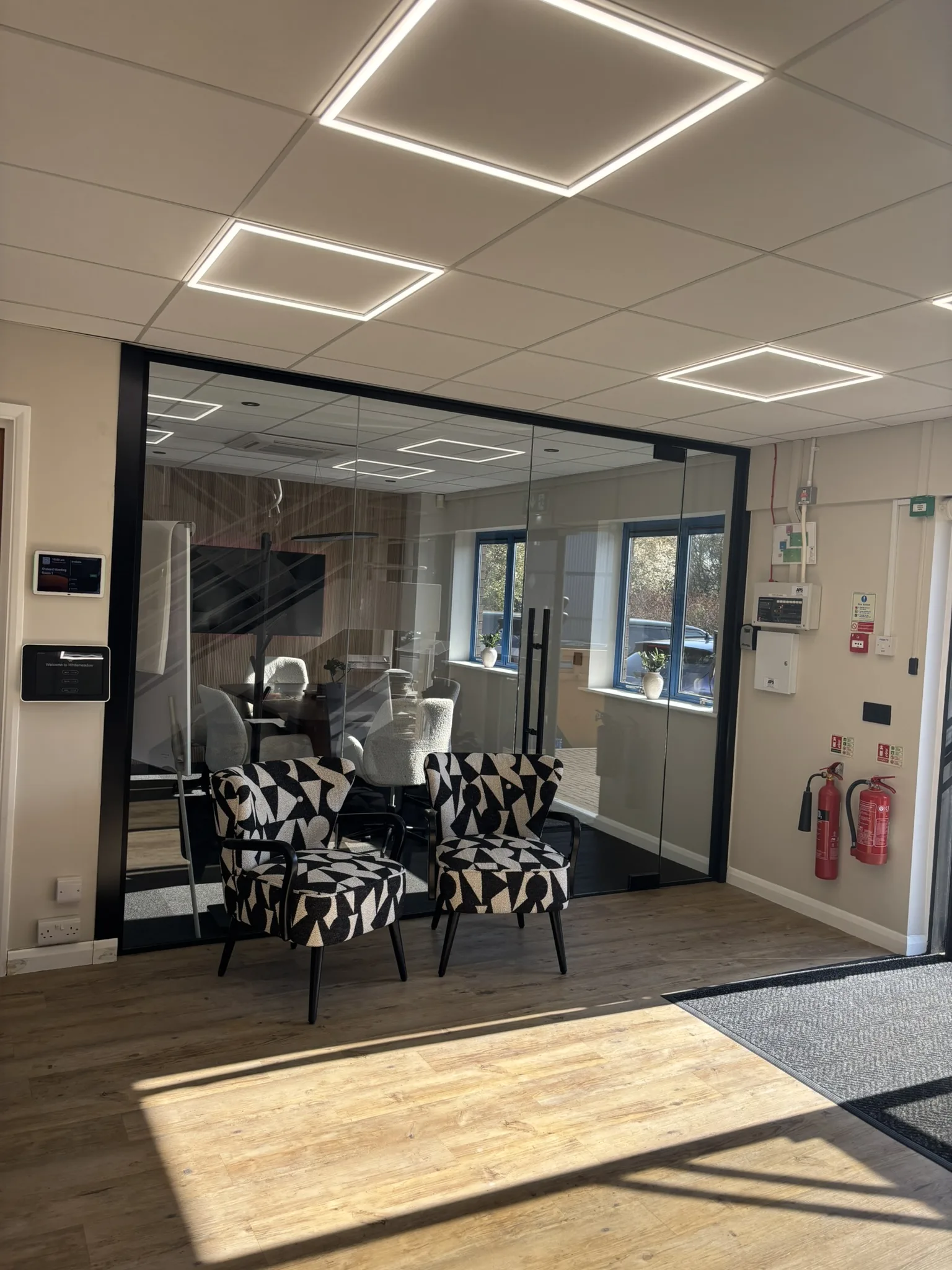
Glass partition installations across Nottinghamshire: aluminium framed systems with 12mm toughened glass
The Installation Process
Most glass partition installations follow a straightforward process. The typical timeframe from survey to completion is two to four weeks, depending on the size of the project and glass lead times.
Survey
We take precise measurements on-site, confirm ceiling height and floor construction, and note anything that affects the frame fixing: existing services, uneven surfaces, structural elements.
Design & Sign-Off
We produce a layout drawing showing panel sizes, door positions, and frame runs. You confirm the design before anything is ordered. Any changes to door swings or panel arrangement are resolved at this stage.
Manufacturing
Glass panels are cut and toughened to the confirmed sizes. Toughened glass cannot be cut after the heat-treatment process, so accuracy at the survey stage is critical. Lead time is typically seven to ten working days.
Installation
Our own team fits everything. A typical single-room partition takes one day; larger floor-plate installations are scheduled in sections to keep disruption manageable. The space is left clean and ready to use.
We work in live offices regularly. Where needed, we can schedule installation outside core hours to keep your operation running without interruption.
What Does a Glass Partition System Cost?
Cost varies significantly depending on the size of the installation, the system specified, and whether acoustic glass or specialist door hardware is included. These are realistic installed figures: supply and fit, including the frame, glass, and door if required.
- £1,500 – £3,000 Small single-glazed partition or meeting room wall: straightforward layout, standard door
- £3,000 – £6,000 Mid-size double-glazed installation: meeting room with acoustic glass and full door set
- £6,000 – £10,000+ Larger floor-plate partitioning: multiple rooms, acoustic laminated glass, branded manifestation
What affects the final cost?
- Total run length and ceiling height
- Single vs double glazed specification
- Standard vs acoustic laminated glass
- Number of doors and hardware specification
- Frame colour (powder coat options vs standard)
- Site access and working hours restrictions
Glass Partition Projects: Nottingham, Derby & Beyond
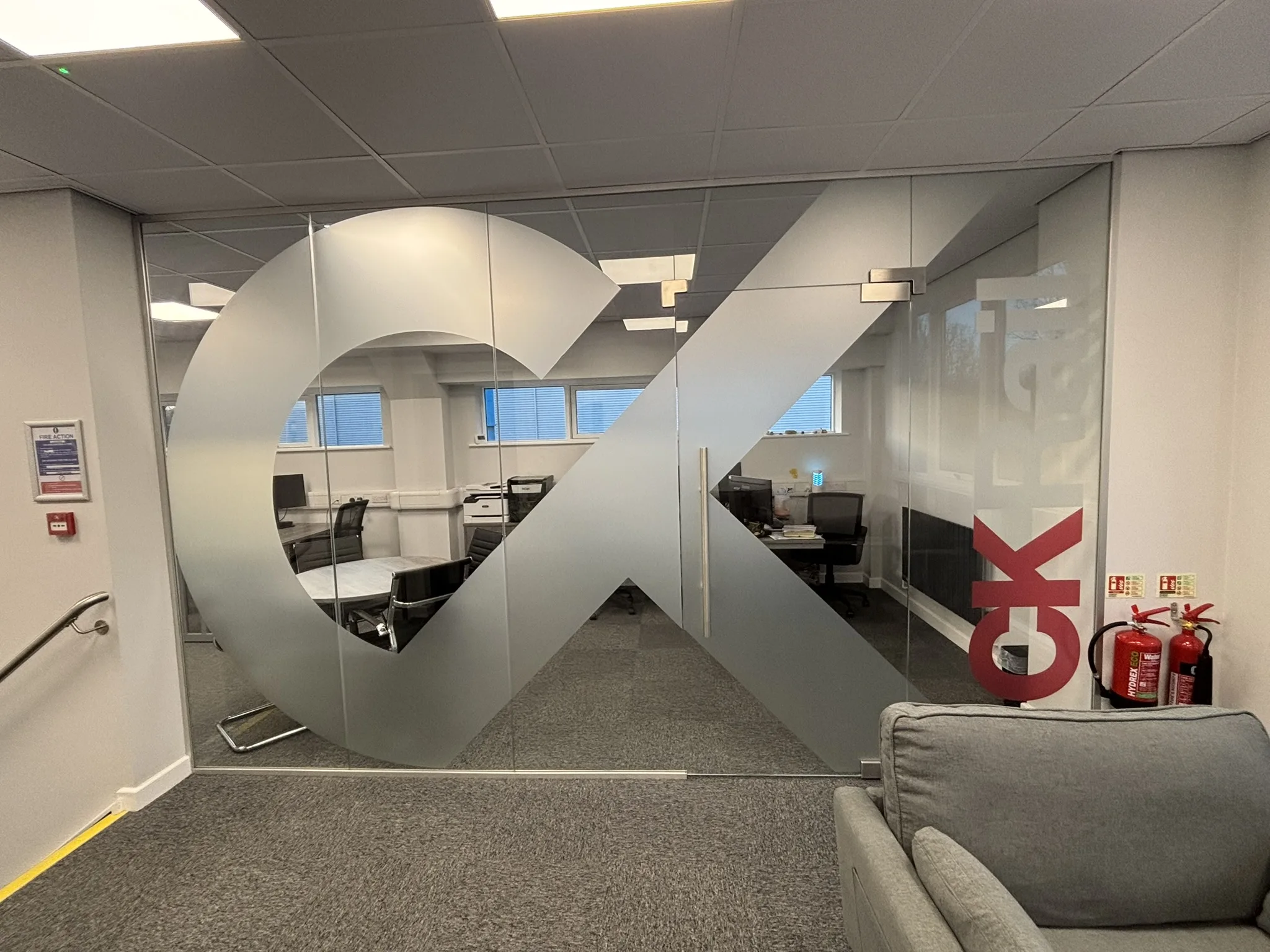
We install glass partitions across the East Midlands and South Yorkshire. Recent projects include single meeting rooms in small offices, full floor-plate fit-outs, and partition walls with integrated doors in industrial and commercial buildings. See the full gallery for locations including Nottingham, Derby, Sheffield, Mansfield, and Chesterfield.
Are Glass Partitions Right for Your Space?
Where glass partitions work well
- Offices where natural light needs to reach internal areas
- Meeting rooms that need visual connection without acoustic bleed
- Spaces where the layout may need to change over time
- Commercial fit-outs with tight programme schedules
- Reception areas and client-facing spaces where appearance matters
Where limitations apply
- Spaces requiring complete acoustic isolation; a solid wall is more effective
- Rooms where privacy from line-of-sight is needed (frosted or manifestation film can help)
- Environments with extreme temperature variation; standard systems aren't thermally rated to window standard
- Any structural situation; glass partitions are non-load-bearing only
If you're unsure whether a glass partition is the right solution for your specific situation, send us a description or floor plan. We'll give you a straight answer, including if something else would serve you better. We cover offices across Nottingham, Derby, Sheffield and the surrounding region.
Ready to Plan Your Glass Partition?
Send us a floor plan, rough measurements, or a description of what you need. We'll advise on the right system, confirm the cost range, and work around your schedule.