Project Photos
Inspired by this project? We'd love to help with yours.
Frameless and spigot glass balustrades designed for timber, composite, and porcelain decking, installed across Nottinghamshire and the East Midlands.
A glass balustrade is one of the single biggest upgrades you can make to a raised decking area. Timber rails and metal balusters obscure the view; a glass system keeps it completely open. Whether you are looking down onto a garden, across open countryside, or over a pool terrace, glass lets you enjoy every bit of the outlook your decking was designed to offer.
Glass balustrades for decking are low maintenance, all-weather, and highly durable. Unlike timber railings there is nothing to paint, sand, or treat year on year, and unlike wrought iron or steel, there is nothing to rust. All systems are specified to BS6180 and installed by our own fitters.
We work on all deck types (timber, composite, and porcelain) and have specialist experience in diamond drilling for porcelain tile installations. Two systems suit decking particularly well: spigot-fixed frameless glass, and frameless channel systems where the deck has a suitable structural edge.
Spigot-fixed systems are the preferred choice for timber decking. Spigots are fixed into or through the deck board and down into the joist structure beneath, providing a structural fixing point that draws load away from the deck surface itself. This keeps drainage clear beneath the glass and avoids sealing a channel against the timber, which can lead to moisture problems over time.
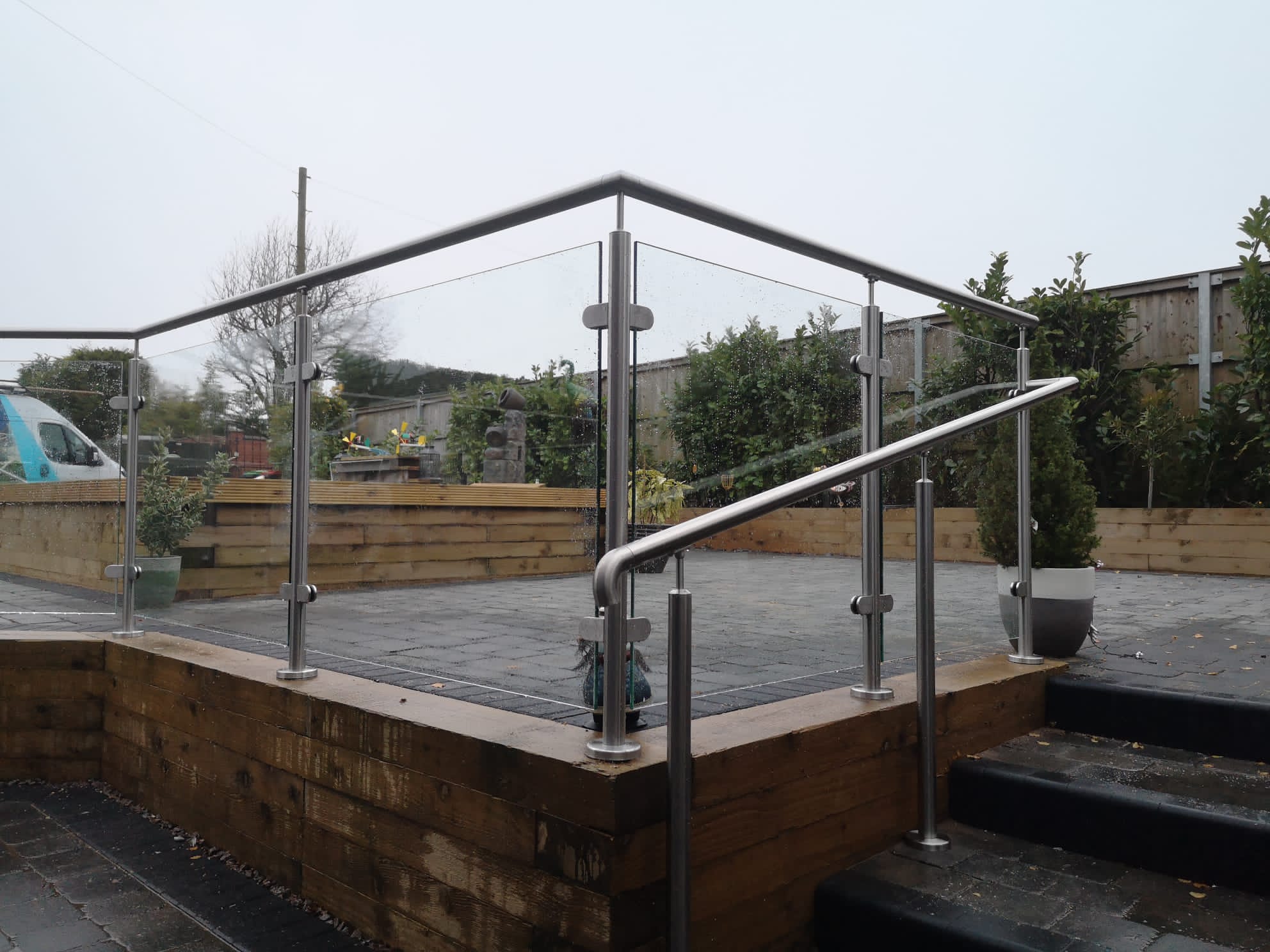
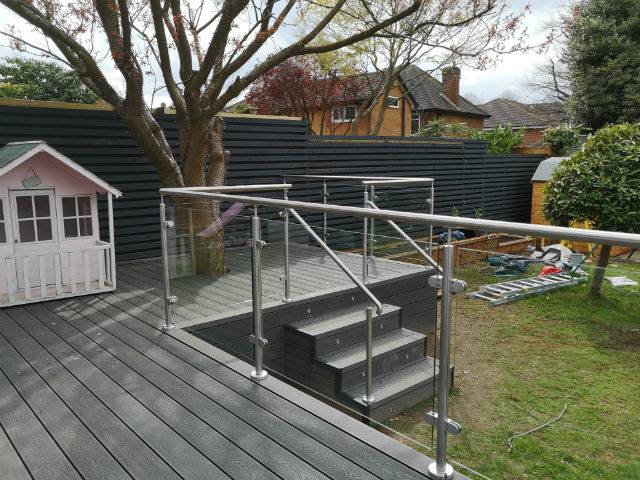
Composite decking is installed on a timber joist subframe in much the same way as softwood decking, which means spigot systems work equally well. Where the deck has a structural fascia board or rim joist at the perimeter, a frameless channel may also be an option; we assess each project individually. The choice between channel and spigot often comes down to the exact structure of the frame and what the client prefers aesthetically.
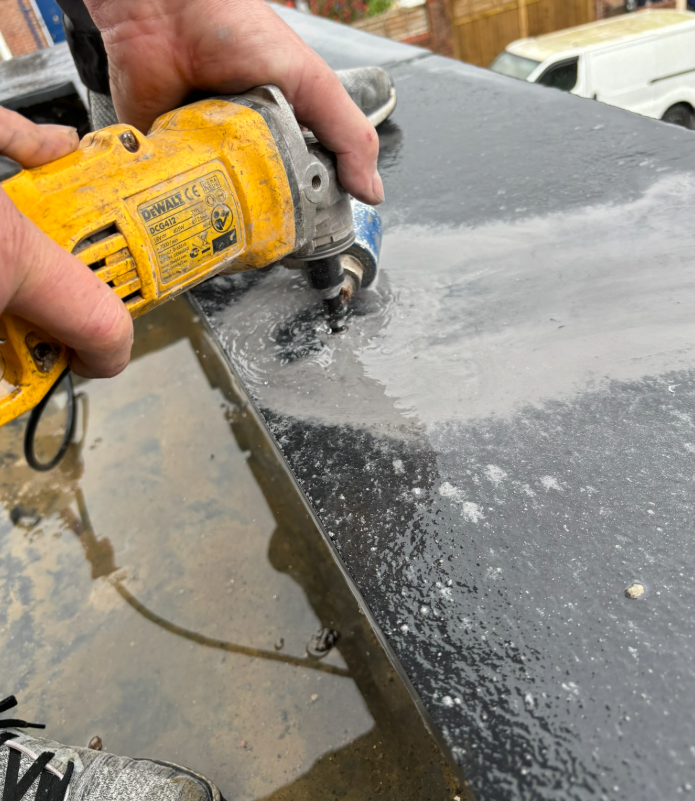
Porcelain paving and decking tiles are increasingly popular for patios and raised terraces, and we work on them regularly. Installing a spigot balustrade through porcelain tiles requires diamond drilling, a specialist process we offer as standard on all relevant decking and garden projects, included in our quoted price.
We use a diamond-tipped core drill on an angle grinder with continuous water cooling. Holes are typically 8–14mm diameter depending on the fixing specification. In over 25 years of installation work, we have never cracked a porcelain tile using this method. The key is using the right bit, keeping water flowing throughout, and letting the drill cut at its own pace rather than forcing it.
Once through the tile, we drill into the substrate below with an SDS drill, clean out all dust, inject polyester resin, and insert an M8 or M10 A2 stainless steel threaded bar. After full cure, the balustrade spigot or post base goes over the bar and is secured with stainless nuts and washers, giving a clean, flush installation that will last decades.
Not all glass is the same, and choosing the correct type for a decking balustrade depends on the system and the height above ground.
Toughened glass is heat-treated to be significantly stronger than ordinary glass. If it does break, which is rare under normal conditions, it shatters into small, relatively harmless fragments. It is commonly used in post and handrail framed systems where the post structure provides additional safety containment.
Laminated glass consists of two toughened panes bonded by an EVA interlayer. If broken, the interlayer holds all fragments in place; the panel stays in the frame. For frameless channel and spigot systems where the glass is the primary structural element, laminated glass is the correct specification. It is also required where the drop below the balustrade is greater (typically over 600mm) or where the application is over a public or high-traffic area.
We specify the correct glass type, thickness, and interlayer for every project as part of our design and quotation process. You will never be sold the wrong glass for your application.
Recent decking glass balustrade installations completed by our team across Nottinghamshire and the East Midlands.
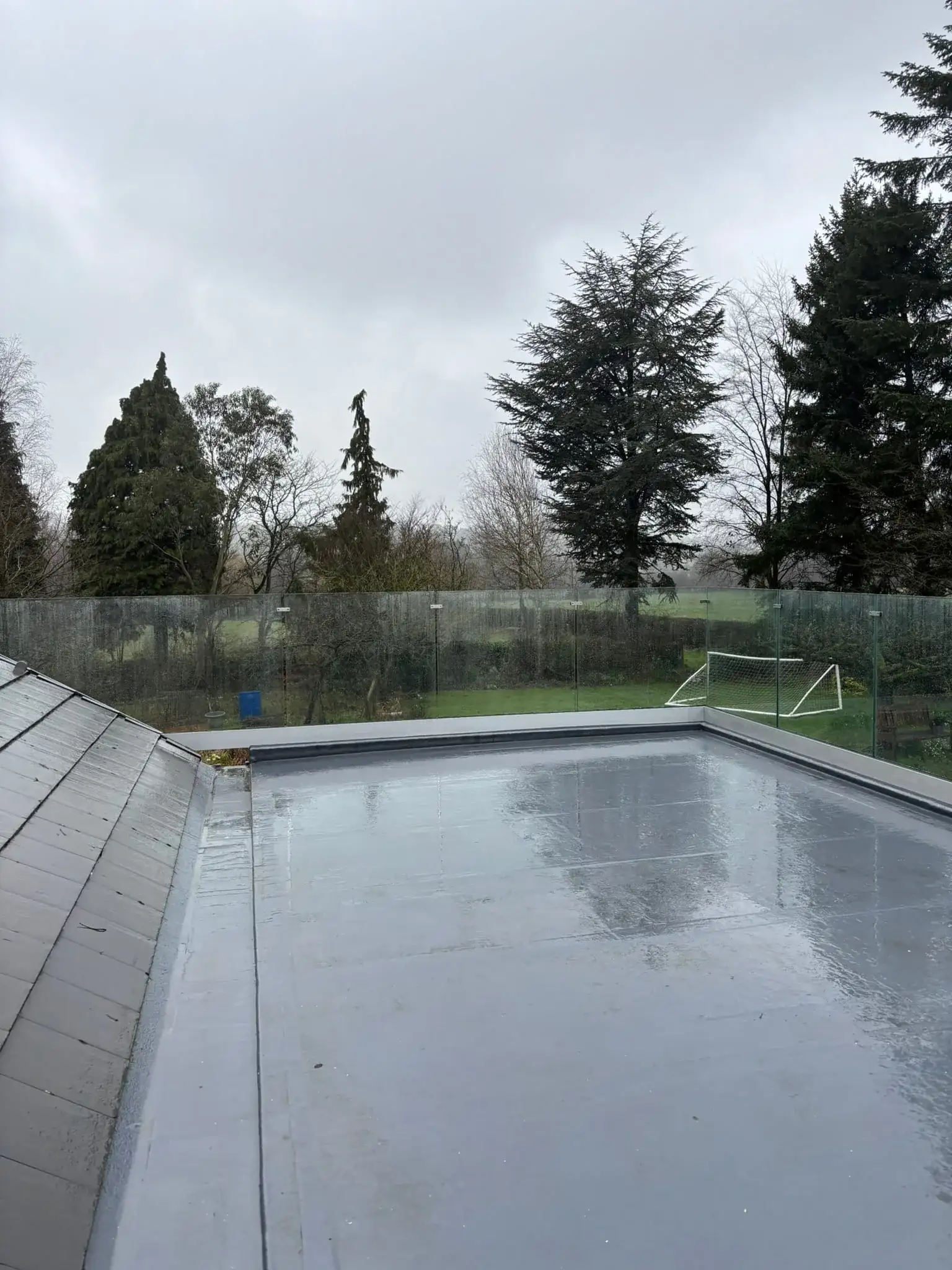
A frameless channel glass balustrade on a large flat-roof balcony in Doncaster — fully frameless, no handrail, installed in two days.
View project →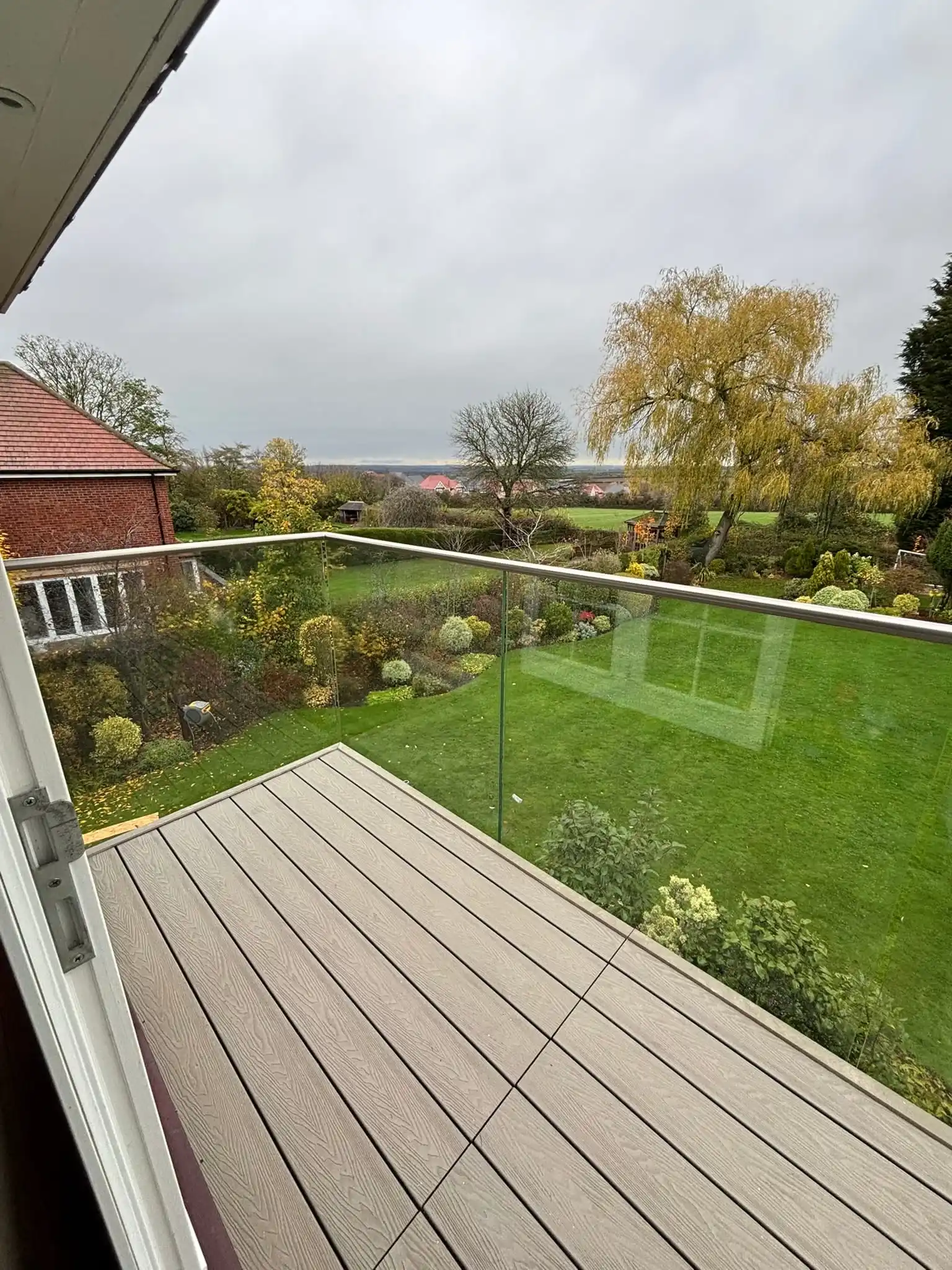
Full renovation of a first-floor balcony on a large detached property in Nottingham — frameless channel system, 17.5mm toughened laminated glass, stainless handrail, composite decking, and aluminium fascia.
View project →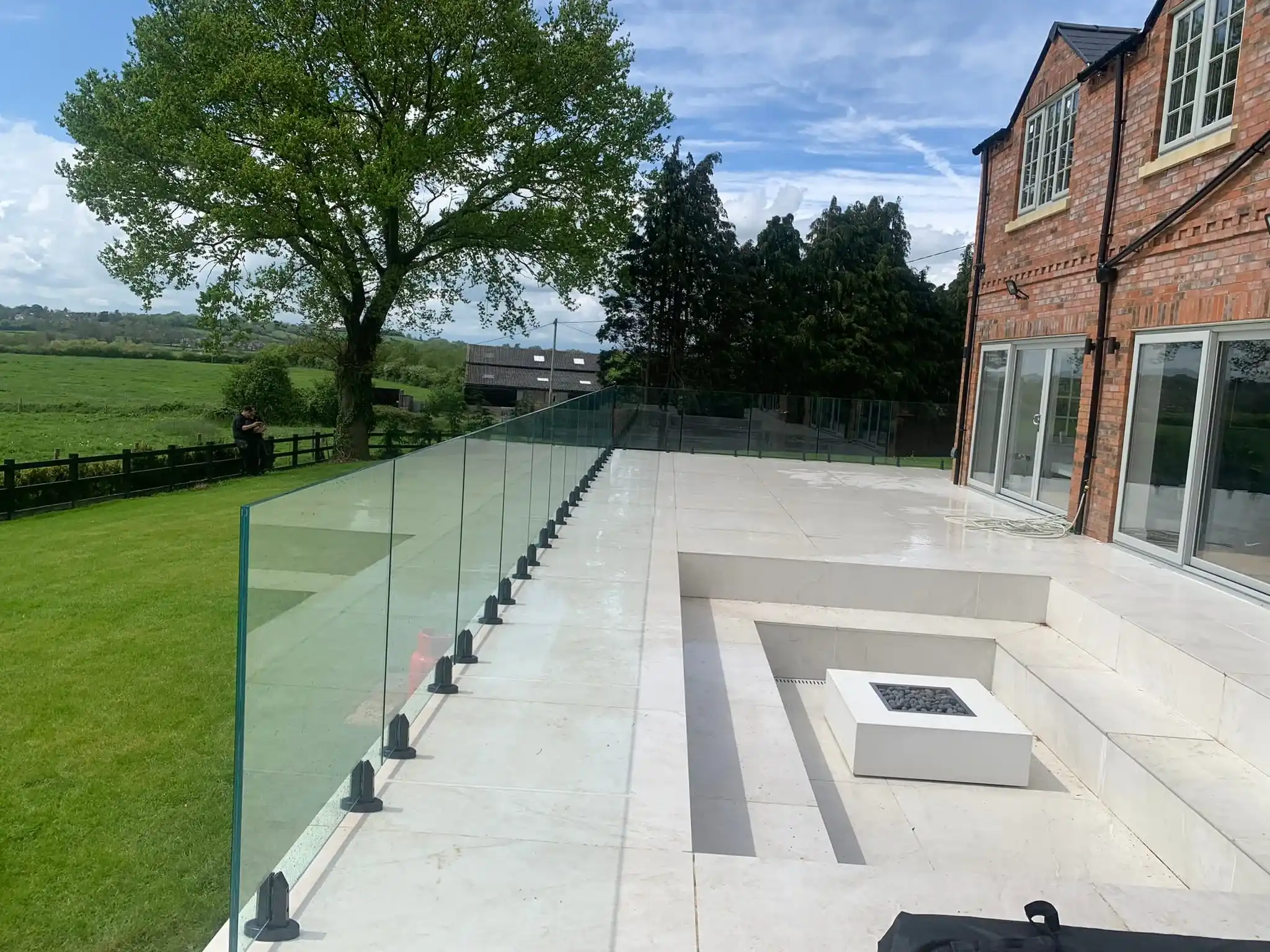
A frameless spigot glass balustrade installed over porcelain tiles in Worksop — diamond drilled through the tile, 21.5mm laminated glass, stainless steel spigots.
View project →Get a free, no-obligation quotation for your decking glass balustrade. Call us, email, or use our contact form and we will respond promptly.
Inspired by this project? We'd love to help with yours.